Used AI to scale content 5x and grow traffic 20x
THE CHALLENGE
Codecademy's organic traffic was declining, and publishing more felt like the obvious strategy. Leadership wanted more content, faster. But the current processes were not scalable. A team of freelance writers was producing 4–6 technical articles a month. Minimal keyword research informed what they wrote. When it did, writers wrote without fully understanding the search intent. Each article took 7-14 days from brief to publish. Publishing more of the same content would have just produced more of what wasn't working.
THE APPROACH
The production process had too many steps that had nothing to do with actual writing. I used AI to take those off writers' plates entirely. That meant separating work into two categories:
1. What requires human judgement
Writing requires human judgment. Technical accuracy requires human judgment. Instructional thinking (how to teach a complex concept) requires human judgment.
2. What doesn't require human judgement
Clustering keywords, structuring briefs, writing outlines, checking SEO coverage against a checklist — these didn't require anyone to think creatively or technically.
AI handled the second category entirely so that writers could spend all their time on the first.
WHAT I BUILT
Three Claude workflows that anyone on the team could use:
Keyword clustering and intent validation
I identified keywords using research tools and exported them as a CSV. A Claude-based workflow clustered them by topic and validated search intent for each. I reviewed and validated the output before sharing it with the writers. The judgment on what to pursue was always mine. Claude only handled the analytical work.
Brief and outline generation
Instead of handing writers a generic outline, the tool asked them a series of questions first — about their audience, the intent behind the article, and how they wanted to teach the content. The outline came from their answers. Writers still drove the creative and instructional direction entirely.
SEO and brand style review
After a draft was written, the tool reviewed it for SEO coverage gaps and brand consistency, flagged issues, and suggested fixes. Writers decided what to act on.
The drafts were always written by humans. These were technical articles with real coding projects at their core, and the instructional thinking behind every article remained human throughout.
THE RESULTS
34 → 263
New articles published (2024 vs 2025)
4–6 → 25–30
Articles produced per month
~7–14 days → ~3–4 days
Production time per article
2,500–7,500 → 25,000–50,000
Weekly visits to content
2024 Production Data
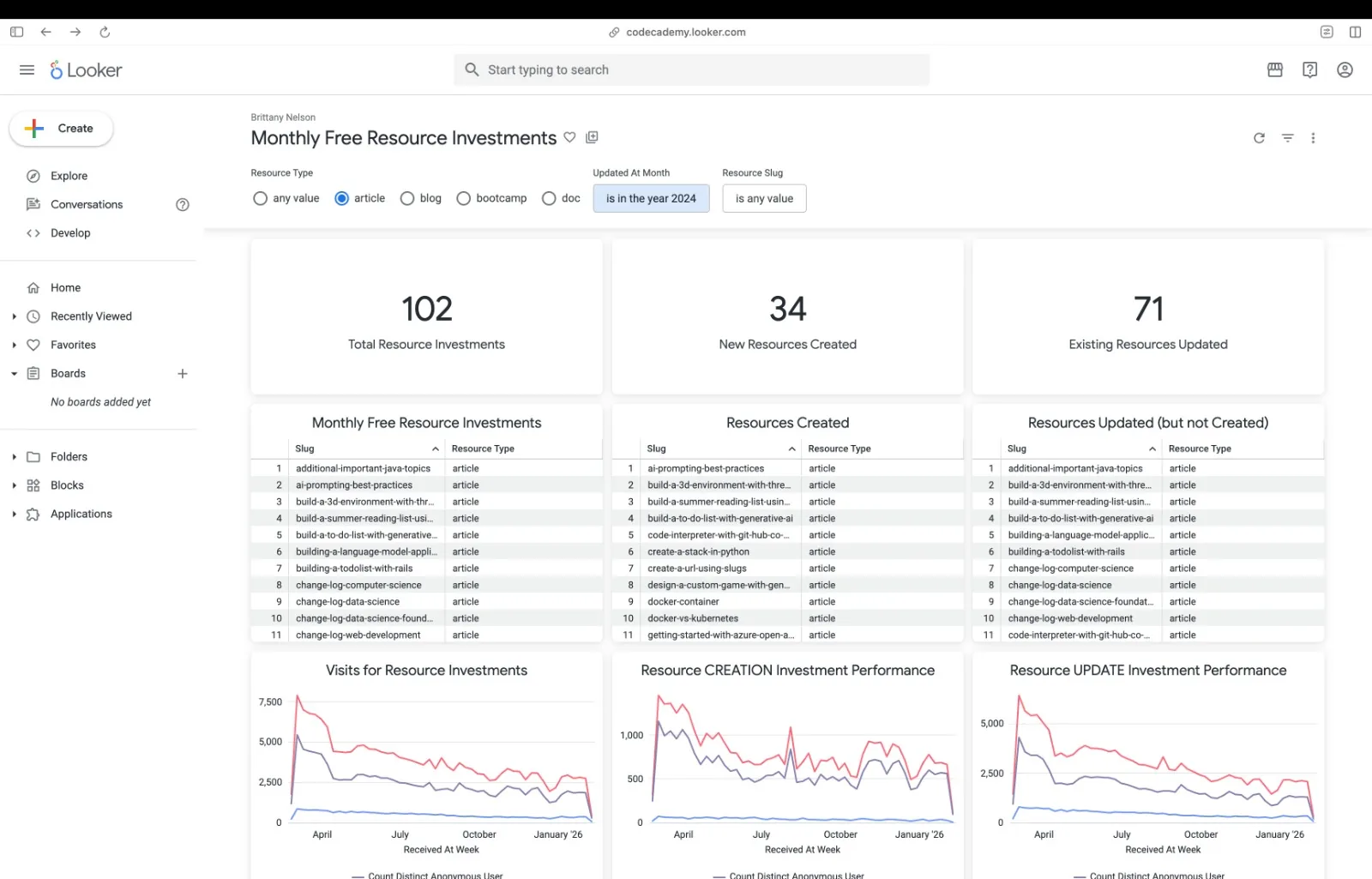
Screenshots from Codecademy's internal Looker dashboard.
2025 Production Data
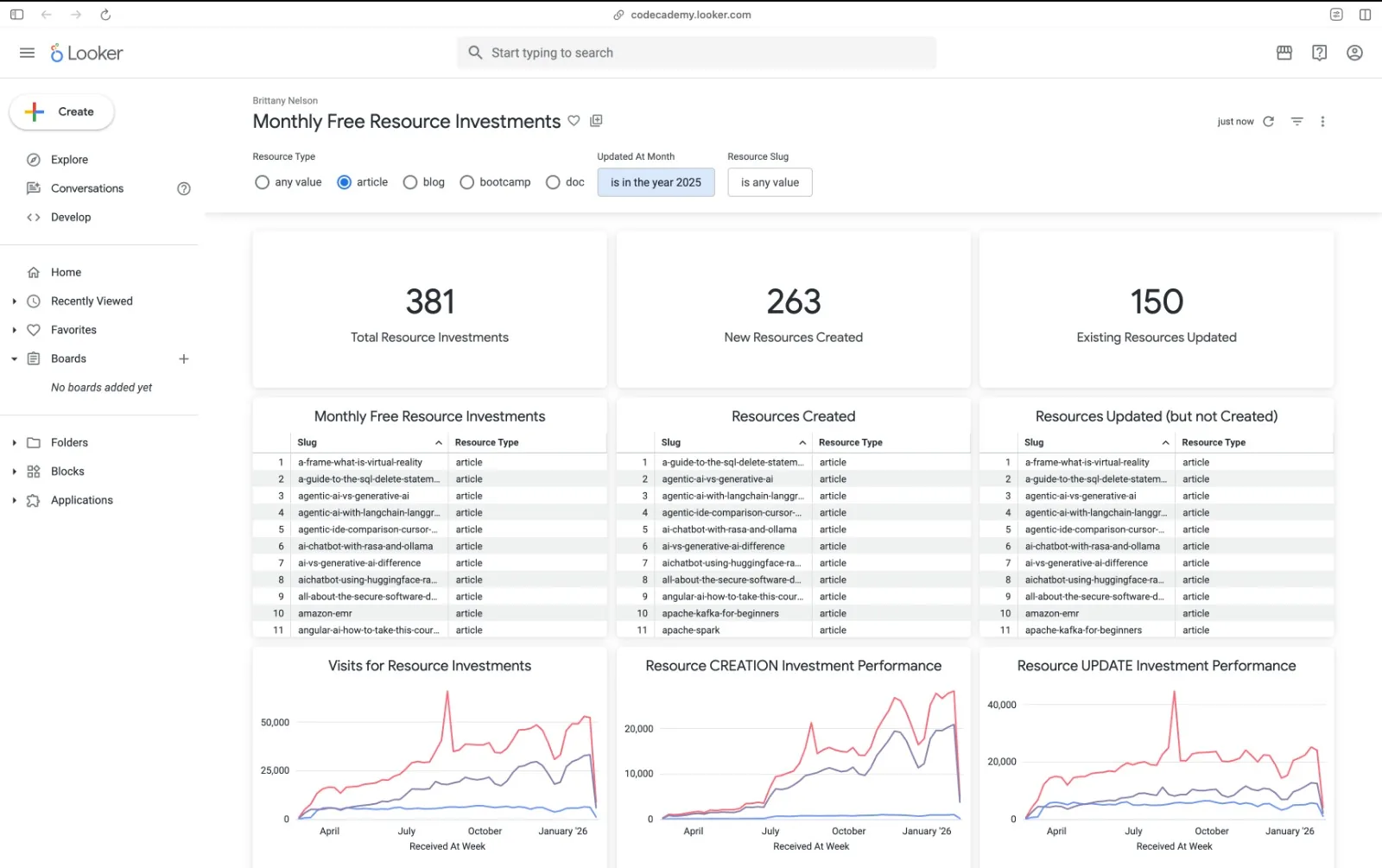
Screenshots from Codecademy's internal Looker dashboard.